


The most common causes of low back pain are spinal diseases, mainly degenerative-dystrophic (osteochondrosis, spondylosis deformans) and excessive tension of the back muscles.In addition, various diseases of the abdominal and pelvic organs, including tumors, can cause the same symptoms as a herniated disc that compresses the spinal root.
It is no coincidence that these patients turn not only to neurologists, but also to gynecologists, orthopedists, urologists and, above all, of course, local or family doctors.
Etiology and pathogenesis of low back pain.
According to modern ideas, the most common causes of low back pain are:
- pathological changes in the spine, mainly degenerative-dystrophic;
- pathological changes in the muscles, most often myofascial syndrome;
- pathological changes in the abdominal organs;
- diseases of the nervous system.
Risk factors for low back pain are:
- intense physical activity;
- uncomfortable working posture;
- injury;
- cooling, air currents;
- alcohol abuse;
- depression and stress;
- occupational diseases associated with exposure to high temperatures (in particular, in hot workshops), radiation energy, sudden temperature fluctuations and vibrations.
Among the vertebral causes of low back pain are:
- root ischemia (discogenic root syndrome, discogenic radiculopathy), resulting from root compression by a herniated disc;
- Reflex muscle syndromes, the cause of which may be degenerative changes in the spine.
Various functional disorders of the lumbar spine can play a certain role in the occurrence of back pain, when, due to incorrect posture, blockages of the intervertebral joints occur and their mobility is impaired.In the joints located above and below the block, compensatory hypermobility develops, causing muscle spasms.
Signs of acute compression of the spinal canal.
- numbness of the perineal area, weakness and numbness of the legs;
- retention of urine and defecation;
- with compression of the spinal cord, a decrease in pain is observed, followed by a feeling of numbness in the pelvic girdle and extremities.
Low back pain in childhood and adolescence is usually caused by abnormalities in the development of the spine.Spina bifida (spina bifida) occurs in 20% of adults.Upon examination, hyperpigmentation, birthmarks, multiple scars and hyperkeratosis of the skin in the lumbar region are revealed.Sometimes urinary incontinence, trophic disorders and weakness in the legs are noted.
Low back pain can be caused by lumbarization (the transition of the S1 vertebra in relation to the lumbar spine) and sacralization (the attachment of the L5 vertebra to the sacrum).These anomalies are formed due to the individual characteristics of the development of the transverse processes of the vertebrae.
Nosological forms
Almost all patients complain of pain in the lower back.The disease is mainly manifested by inflammation of low-mobility joints (intervertebral, costovertebral, lumbosacral joints) and spinal ligaments.Little by little, ossification develops in them, the spine loses elasticity and functional mobility, it becomes like a bamboo stick, fragile and easily injured.At the stage of pronounced clinical manifestations of the disease, the mobility of the chest during breathing and, as a result, the vital capacity of the lungs significantly decreases, which contributes to the development of a number of lung diseases.
spinal tumors
A distinction is made between benign and malignant tumors, originating mainly in the spine and metastatic.Benign tumors of the spine (osteochondroma, chondroma, hemangioma) are sometimes clinically asymptomatic.In hemangioma, a spinal fracture can occur even with minor external influences (pathological fracture).
Malignant tumors, mostly metastatic, originate in the prostate, uterus, breast, lungs, adrenal glands, and other organs.Pain in this case occurs much more often than in benign tumors;It is generally persistent, painful, intensifies with the slightest movement and deprives patients of rest and sleep.It is characterized by a progressive deterioration of the condition, an increase in general exhaustion and pronounced changes in the blood.X-rays, CT scan and MRI are of great importance for diagnosis.
Osteoporosis
The main cause of the disease is a decrease in the function of the endocrine glands due to an independent disease or against the background of general aging of the body.Osteoporosis can develop in patients who take hormones, aminazine, anti-tuberculosis drugs and tetracycline for a long time.Radicular disorders accompanying back pain arise due to deformation of the intervertebral foramina, and spinal disorders (myelopathy) arise due to compression of the radiculomedullary artery or vertebral fracture, even after minor injuries.
myofascial syndrome
Myofascial syndrome is the leading cause of back pain.It can occur due to overexertion (during intense physical activity), excessive extension and bruising of the muscles, non-physiological posture during work, a reaction to emotional stress, a shortening of a leg and even flat feet.
Myofascial syndrome is characterized by the presence of so-called "trigger" zones (trigger points), the pressure of which causes pain, which often radiates to neighboring areas.In addition to myofascial pain syndrome, the cause of pain can also be an inflammatory disease of the muscles - myositis.
Low back pain often occurs due to diseases of internal organs: gastric and duodenal ulcers, pancreatitis, cholecystitis, urolithiasis, etc.They can be pronounced and mimic the symptoms of lumbago or discogenic lumbosacral radiculitis.However, there are also clear differences, thanks to which it is possible to differentiate referred pain from that arising from diseases of the peripheral nervous system, which is due to the symptoms of the underlying disease.
Clinical symptoms of low back pain.
Most often, low back pain occurs between the ages of 25 and 44.There are acute pains, which usually last 2 to 3 weeks and sometimes up to 2 months, and chronic pains, which last more than 2 months.
Compression radicular syndromes (discogenic radiculopathy) are characterized by a sudden onset, often after heavy lifting, sudden movements, or hypothermia.Symptoms depend on the location of the injury.The onset of the syndrome is based on compression of the root by a herniated disc, which occurs as a result of degenerative processes facilitated by static and dynamic loads, hormonal disorders and injuries (including microtraumatization of the spine).Most often, the pathological process involves areas of the spinal roots from the dura mater to the intervertebral foramen.In addition to herniated disc, root trauma may involve bone growths, scar changes in the epidural tissue, and hypertrophied yellow ligament.
The upper lumbar roots (L1, L2, L3) are rarely affected: they account for no more than 3% of all lumbar radicular syndromes.The L4 root is affected twice as often (6%), causing a characteristic clinical picture: mild pain along the lower and anterior inner surface of the thigh, the medial surface of the leg, paresthesia (sensation of numbness, burning, tingling) in this area;Slight weakness of the quadriceps muscle.Knee reflexes are preserved and sometimes even increased.The L5 root is the most affected (46%).The pain is localized in the lumbar and gluteal regions, along the outer surface of the thigh, the anterior-outer surface of the lower leg to the foot and fingers III-V.It is often accompanied by a decrease in the sensitivity of the skin of the outer anterior surface of the leg and the strength of the extensor muscles of the third to fifth fingers.The patient finds it difficult to stay on his heels.With long-term radiculopathy, hypotrophy of the tibialis anterior muscle develops.The S1 root is also usually affected (45%).In this case, the pain in the lower back radiates along the posterior outer surface of the thigh, the outer surface of the lower leg and foot.Examination often reveals hypalgesia of the posterior external surface of the leg, decreased strength of the triceps muscle and toe flexors.These patients find it difficult to stand on their toes.There is a decrease or loss of the Achilles reflex.
Vertebrogenic lumbar reflex syndrome
It can be acute or chronic.Acute lower back pain (lumbago) occurs within minutes or hours, often suddenly due to uncomfortable movements.Stabbing, stabbing pain (like an electric shock) is localized throughout the lower back, sometimes radiating to the iliac region and buttocks, sharply intensifies when coughing, sneezing and decreases when lying down, especially if the patient finds a comfortable position.The movement of the lumbar spine is limited, the lumbar muscles are tense, causing Lasegue's symptom, often bilateral.Thus, the patient lies on his back with his legs extended.The doctor simultaneously bends the affected leg at the knee and hip joints.This does not cause pain, because with this position of the leg the diseased nerve relaxes.Then the doctor, leaving the leg bent at the level of the femoral hip joint, begins to straighten it at the level of the knee, thus causing tension on the sciatic nerve, which causes severe pain.Acute lumbodynia usually lasts 5 to 6 days, sometimes less.The first attack ends faster than the following ones.Repeated attacks of low back pain tend to develop into chronic low back pain.
Atypical low back pain
There are a number of clinical symptoms that are atypical of back pain caused by degenerative changes in the spine or myofascial syndrome.These signs include:
- the appearance of pain in childhood and adolescence;
- back injury shortly before the onset of low back pain;
- back pain accompanied by fever or signs of intoxication;
- backbone;
- rectum, vagina, both legs, pain in waist;
- connection of low back pain with eating, defecating, having sex, urinating;
- non-ecological pathology (amenorrhea, dysmenorrhea, vaginal discharge), which appeared against the background of low back pain;
- increased pain in the lumbar area in a horizontal position and a decrease in a vertical position (Razdolsky's symptom, characteristic of a tumor process in the spine);
- steadily increasing pain for one or two weeks;
- limbs and appearance of pathological reflexes.
Examination methods
- external examination and palpation of the lumbar region, identification of scoliosis, muscle tension, pain and trigger points;
- determination of the range of motion in the lumbar spine, areas of muscle atrophy;
- examination of neurological status;determination of tension symptoms (Lassegue, Wasserman, Neri).[Wasserman symptom study: Bending the leg at the knee joint in a prone patient causes pain in the thigh.Study of Neri's symptom: the sudden tilt of the head towards the chest of a patient lying on his back with his legs straight causes acute pain in the lower back and along the sciatic nerve.];
- study of the state of sensitivity, reflex sphere, muscle tone, vegetative disorders (swelling, changes in color, temperature and humidity of the skin);
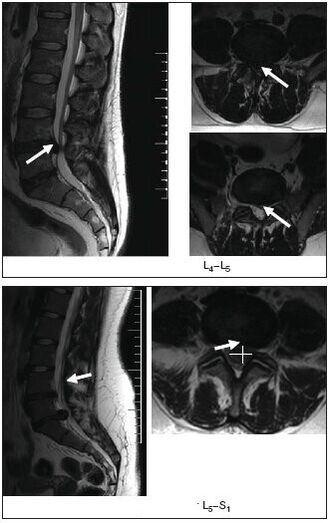
- x-ray, computer or MRI of the spine.
MRI is especially informative.
- ultrasound examination of the pelvic organs;
- gynecological examination;
- If necessary, additional studies are performed: cerebrospinal fluid, blood and urine, sigmoidoscopy, colonoscopy, gastroscopy, etc.
Treatment
Acute low back pain or exacerbation of vertebral or myofascial syndromes.
Undifferentiated treatment.Smooth motor mode.In case of severe pain in the first days, rest in bed and then walk with crutches to unload the spine.The bed should be hard and a wooden board should be placed under the mattress.For warmth, a wool shawl, a heating pad, and bags of hot sand or salt are recommended.Ointments have a beneficial effect: finalgon, tiger, capsin, diclofenac, etc., as well as mustard plasters and pepper plasters.Ultraviolet irradiation is recommended in erythematous doses, leeching (taking into account possible contraindications) and irrigation of the painful area with ethyl chloride.
Electrical procedures have an analgesic effect: transcutaneous electroanalgesia, modulated sinusoidal currents, diadynamic currents, electrophoresis with novocaine, etc.The use of reflexology (acupuncture, laser therapy, cautery) is effective;novocaine blocks, trigger point pressure massage.
Drug therapy includes analgesics, NSAIDs;tranquilizers and/or antidepressants;Medicines that reduce muscle tension (muscle relaxants).In case of arterial hypotension, tizanidine should be prescribed with great caution due to its hypotensive effect.If swelling of the spinal roots is suspected, diuretics are prescribed.
The main analgesic drugs are NSAIDs, which are often used uncontrollably by patients when pain intensifies or reappears.It should be noted that long-term use of NSAIDs and pain relievers increases the risk of complications from this type of therapy.Currently, there is a large selection of NSAIDs.For patients suffering from spinal pain, due to its availability, effectiveness, and lower likelihood of side effects (gastrointestinal bleeding, dyspepsia), the preferred "nonselective" drugs are diclofenac, 100 to 150 mg/day.orally, intramuscularly, rectally, locally, ibuprofen and ketoprofen orally 200 mg and topically, and among the “selective” ones – meloxicam orally 7.5-15 mg/day, nimesulide orally 200 mg/day.
When treated with NSAIDs, side effects may appear: nausea, vomiting, loss of appetite, pain in the epigastric region.Possible ulcerogenic effect.In some cases, ulcerations and bleeding may occur in the gastrointestinal tract.Additionally, headaches, dizziness, drowsiness and allergic reactions (skin rash, etc.) are noted.Treatment is contraindicated in ulcerative processes in the gastrointestinal tract, pregnancy and lactation.To prevent and reduce dyspeptic symptoms, it is recommended to take NSAIDs during or after meals and drink milk.In addition, the intake of NSAIDs when pain increases along with other medications that the patient takes to treat concomitant diseases leads, as observed in the long-term treatment of many chronic diseases, to a decrease in adherence to treatment and, as a result, to insufficient effectiveness of therapy.
Therefore, modern methods of conservative treatment include the mandatory use of drugs that have chondroprotective, chondrostimulating effects and have a better therapeutic effect than NSAIDs.These requirements are fully met by the drug Teraflex-Advance, which is an alternative to NSAIDs for mild to moderate pain.One capsule of the drug Teraflex-Advance contains 250 mg of glucosamine sulfate, 200 mg of chondroitin sulfate and 100 mg of ibuprofen.Chondroitin sulfate and glucosamine participate in the biosynthesis of connective tissue, helping to prevent cartilage destruction processes and stimulating tissue regeneration.Ibuprofen has analgesic, anti-inflammatory and antipyretic effects.The mechanism of action occurs due to the selective blockade of cyclooxygenase (COX types 1 and 2), the main enzyme in the metabolism of arachidonic acid, which leads to a decrease in the synthesis of prostaglandins.The presence of NSAIDs in the composition of the drug Theraflex-Advance helps to increase the range of motion of the joints and reduce morning stiffness of the joints and spine.It should be noted that, according to R.J.Tallarida et al., the presence of glucosamine and ibuprofen in Theraflex-Advance provides synergism with respect to the analgesic effect of the latter.Furthermore, the analgesic effect of the glucosamine/ibuprofen combination is achieved with a 2.4 times lower dose of ibuprofen.
After relieving pain, it is rational to switch to taking the drug Teraflex, which contains the active ingredients chondroitin and glucosamine.Teraflex is taken 1 capsule 3 times a day.during the first three weeks and 1 capsule 2 times a day.in the next three weeks.
The vast majority of patients taking Theraflex experience positive dynamics in the form of pain relief and reduction of neurological symptoms.The drug was well tolerated by patients and no allergic manifestations were observed.The use of Teraflex for degenerative diseases of the spine is rational, especially in young patients, both in combination with NSAIDs and as monotherapy.In combination with NSAIDs, the analgesic effect occurs 2 times faster and the need for therapeutic doses of NSAIDs progressively decreases.
In clinical practice, for lesions of the peripheral nervous system, including those associated with spinal osteochondrosis, B vitamins, which have a neurotropic effect, are widely used.Traditionally, the alternative administration method of vitamins B1, B6 and B12, 1-2 ml each, is used.intramuscularly with daily alternation.The course of treatment is 2 to 4 weeks.The disadvantages of this method include the use of small doses of medications, which reduce the effectiveness of treatment, and the need for frequent injections.
For discogenic radiculopathy, traction therapy is used - traction (including underwater) in a neurological hospital.In myofascial syndrome, after local treatment (novocaine block, irrigation with ethyl chloride, anesthetic ointments), a hot compress is applied to the muscles for several minutes.
Chronic low back pain of vertebrogenic or myogenic origin.
In case of a herniated disc, it is recommended:
- wearing a rigid corset such as a “weightlifter's belt”;
- avoiding sudden movements and bending, limiting physical activity;
- physiotherapy to create a muscle corset and restore muscle mobility;
- massage;
- novocaine blocks;
- reflexology;
- physiotherapy: ultrasound, laser therapy, heat therapy;
- intramuscular vitamin therapy (B1, B6, B12), multivitamins with mineral supplements;
- for paroxysmal pain, carbamazepine is prescribed.
Non-pharmacological treatments
Despite the availability of effective means of conservative treatment and the existence of dozens of techniques, some patients require surgical treatment.
The indications for surgical treatment are divided into relative and absolute.The absolute indication for surgical treatment is the development of caudal syndrome, presence of sequestered intervertebral disc herniation, severe radicular pain syndrome that does not decrease despite treatment.The development of radiculomyeloischemia also requires emergency surgical intervention, however, after the first 12-24 hours, the indications for surgery in such cases become relative, firstly, due to the formation of irreversible changes in the roots and, secondly, because in most cases, during treatment and rehabilitation measures, the process recedes by about 6 months.The same regression periods are observed with delayed operations.
Relative indications include failure of conservative treatment and recurrent sciatica.Conservative therapy should not exceed 3 months in duration.and last at least 6 weeks.It is assumed that the surgical approach in cases of acute radicular syndrome and failure of conservative treatment is justified within the first 3 months.after the onset of pain to prevent chronic pathological changes in the root.A relative indication is cases of extremely severe pain syndrome, when the pain component is replaced by an increased neurological deficit.
Among physiotherapeutic procedures, electrophoresis with the proteolytic enzyme caripazim is currently widely used.
It is known that therapeutic physical training and massage are integral parts of the complex treatment of patients with spinal injuries.Therapeutic gymnastics pursues the objectives of general strengthening of the body, increasing efficiency, improving coordination of movements and improving physical fitness.In this case, special exercises are aimed at restoring certain motor functions.